Sony Corp.

Sony to Use Translucent Mirror Technology in all Future Alphas


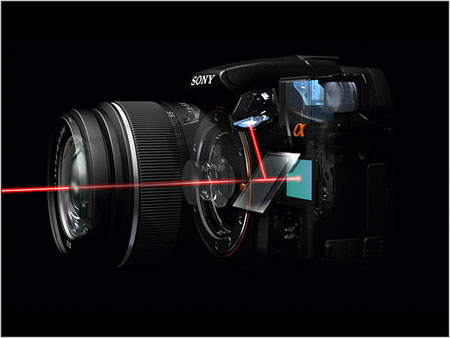
Sony Electronics has finally gone on record about the future of the Alpha family lineup and fans of translucent mirror technology will be happy. From here on, all future Alpha cameras (APS-C and Fulflrame) will use translucent mirror technology which allows for an optimized shutter speed (10 frames per second) and video recording with autofocus. This means that the Sony flagship A700, A800 and A900 series will be losing out their current OVF for the new EVF technology which gives you 100% frame coverage, offers better low light conditions, and on-screen information.

 “In our range Alpha the future is to replace the mechanical electronics.” 

What do you think? Are you a fan of Sony’s translucent mirror technology? Let us know in the comments.

[Via Quesabesde]

Sony Qriocity Overview on the PlayStation 3 (Video)


Earlier today, I wrote about how I believe Sony can battle the likes of Apple and make Qriocity, their cloud music streaming service, a hit. For those who are wondering how Qriocity looks on a device like the PlayStation 3, the following video is for you. In the video, I go over the user interface and not only how to navigate the service, but how to get the most out of it as well. Your comments are always welcome below or you can reach us on Facebook, Twitter and voicemail at (661) 750-BLOG.

Sony Has 7 Months to Make Qriocity a Success Before Apple Takes Control


In December 2010, Sony began rolling out Qricoity Music Unlimited, a music streaming service that would enable Sony devices like the PlayStation 3, Bravia televisions, and Blu-ray players to have access to a library of over 6 million songs. The service first launched in the UK and Ireland and expanded quickly to France, Germany, Italy, and Spain in January with the US receiving it in February. The service comes at two price points, with $3.99 a month getting you the basic offerings and $9.99 a month landing you at the premium end of the service. What you think of the price point is an altogether different conversation, but the fact that Sony has been able to offer this service in so many different countries so quickly is something that should not be overlooked.

People often complain that they might not have Netflix in Europe or lack of Qriocity in Canada but the truth of the matter is, most of the time, the blame is placed on the wrong provider. Netflix would love to be in every country and Apple would love to give every iTunes user the same music/movie/TV show access, no matter your residence, but the fact of the matter is that they cannot. This is in part due to complicated copyright laws and country laws. While Universal Records might have have the rights to Lady Gaga in the US, the same might not be true in Europe and while Sony Pictures made Zombie Land, don’t be surprised if in the country you live, somebody else like Warner Brothers or Paramount actually distributed it. Add on top of that different legal requirements of the given country and you can quickly see why it’s not as simple as flipping a switch at Sony HQ and offering a service like Qriocity to other countries.

This brings us back to Qriocity and why it has 7 months to live. First, I have to say that I’m currently using Qriocity and although it’s not a service for me—and it’s not because I use other streaming services—I get it and like it. Many people don’t feel the need to own their music. Instead, they want a radio that is catered to them, and that’s what Qriocity basically is. It is a radio station that gives you access to millions of songs while allowing you to be the DJ. I realize that the future is in the cloud, so services like Qriocity and Pandora will eventually be the way, and Sony knows this too. But there is another slumbering giant that knows this as well. Apple singlehandedly changed the music industry with the iPod and iTunes, and while I won’t be getting into a history lesson about it, it’s an understatement to say that Apple has leverage and experience when it comes to negotiating deals and offering them in a consumer-friendly way.

In late 2009, Apple quietly purchased a small music streaming service called Lala and soon after began building the world’s largest data center. Apple not only knows that the future is in the cloud, but is also building a robust infrastructure to support their future plans. It’s no secret that when Apple releases a product, it’s a big deal, and it’s also no secret that every September, the iPod and iTunes family gets refreshed. With the data center now nearly complete and with two silent years come this September, you can bet that Apple will be announcing an iTunes music streaming service on top of their current standalone iTunes offering.

The minute this happens, Apple will have dwarfed any offerings from the likes of Sony because of sheer scale. Now every Mac, PC and iOS device like the iPod Touch, iPhone, iPad, and AppleTV will have access to their streaming service. Mix this with Apple’s relentless advertising campaign and you can see how a service like this will be if not an instant hit, far ahead of Sony’s Qriocity Music Unlimited. But despite these last two paragraphs, this is not a doom and gloom article for Qriocity. Instead, it’s recognizing what Sony is capable of doing if they use their might.

Europe Receives Sony’s New VAIO L Series Touch HD PC/TV all-in-one


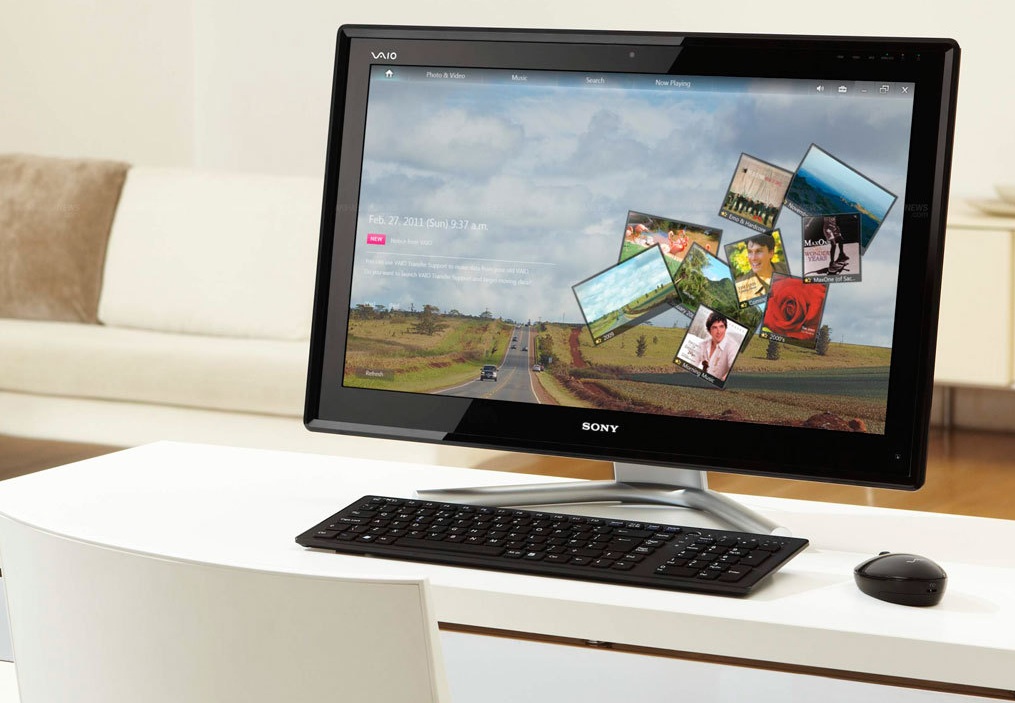
During CES 2011, we had the chance to look and play with Sony’s new VAIO L which we thought had some Minority Report-like technologies. With the series set to make its way to the US shores in the next month, Sony is already looking at Europe for the next wave of shipments. The VAIO VPCL21S1E/B packs the same 24-inch 1080p Touchscreen display with “Edge Access” that we saw during CES. Now, we also have some official specs to accompany this all-in-one PC which include:

  • Intel Sandy Bridge Core i7-2630QM
  • 8GB of RAM
  • 1TB HDD
  • Nvidia GeForce GT 540M
  • Blu-Ray Reader/Burner
  • WiFi 802.11n
  • Bluetooth 3.0
  • USB 3.0
  • HDMI Out/In
  • HD Web Camera and a Wireless Keyboard.

We’re still lacking an official release date and price point but I would expect the latter to stay in line with the current $1,500 price. Hit the jump for a few more shots and official press release.

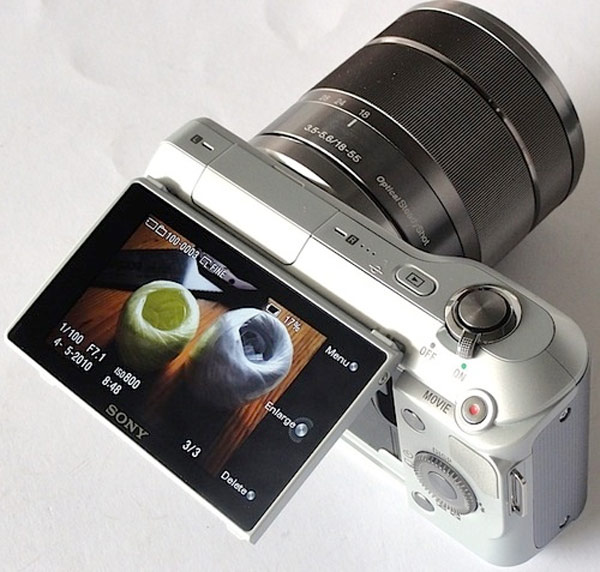
NEX-3 Officially Discontinued in Japan, NEX-C3 Release Imminent?


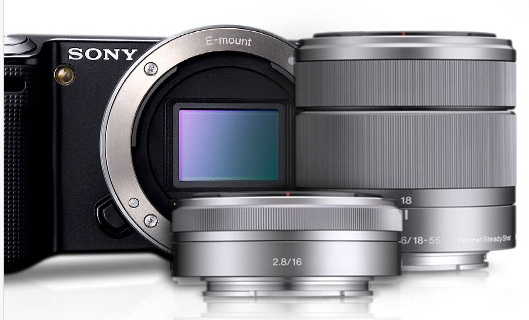
The pieces continue to fall in place with Sony discontinuing the popular NEX-3 in Japan. As we reported last week, Sony is looking at an April time frame to release the next generation NEX, currently dubbed as the NEX-C3. With the current model being officially discontinued in Sony’s home turf, we can only imagine that the same well happen over the next several weeks in other countries. We’ve already seen retailers offer discounts on the current NEX and would advise you to either pick one up because of a great deal, assuming you are okay with the current features, or hang tight for another month as Sony clears out its current inventory channels and prepares for the new model.

[Via DC.Watch]

Sony Bravias to Display Two Different 3D Images on the Same Set

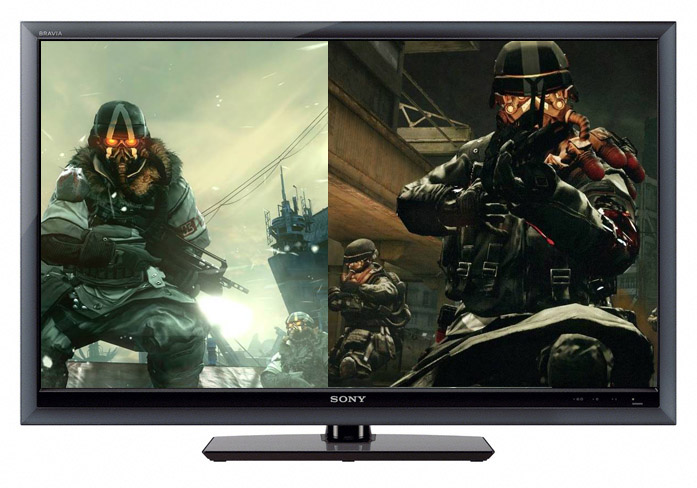
As much fun as online multiplayer can be, nothing beats having a friend or two over to play some multiplayer games. For those of us who grew up on gaming , the PSone and PS2 era, as well as the N64  had games like Goldeneye and Twisted Metal, which were centered around a group of friends playing the hell out of a game. Some games would offer LAN support, but that required multiple TVs and consoles. Instead, most games offered split view on the same screen. Of course, no matter if you had a 27-inch TV or a 60-inch set, you couldn’t help but have a wandering eye at times, especially if you kept getting snipped in the head or tripped on one too many proximity mines.

With advances in television engines and 3D offerings, Sony is looking to change this in their future Bravia televisions. The guys over at Pocket-lint had the opportunity to get a demo by Mick Hocking, senior director for SCEE and director of World Wide Studio’s 3D Stereoscopic Team in London, where two players were able to play Killzone 3 on the same PS3 and on the same Bravia 3D TV, without actually seeing each others screen. With this new technology, each player is able to get the entire screen, dedicated to them as if they were on a separate television with no quality loss.

In order to achieve this, each player had to sit at a particular angle and look towards the screen while somebody sitting in the middle would see a blurred image of the two. The concept and idea behind such a technology is limitless as people have been fighting over the wandering eye and the end game results from it for years. And now, maybe you can finally watch your Lakers while the missus watches What Not to Wear. Though still in development, what makes this exciting is that Sony was able to show this with currently available devices like the PlayStation 3 and Killzone 3 which shipped today and not rely on specific demo materials. What do you think would be the best time to enable a dual video mode? Let us know.

[Via Pocket-lint]

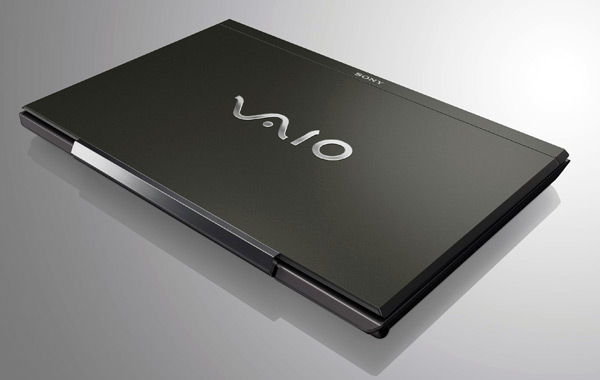
Sony VAIO S Series Gains Intel Sandy Bridge Core i5-2410M CPU


March is turning out to be a big update month for Sony’s VAIO lineup. Hot on the heels of their VAIO CA and CB announcements, Sony is looking to update their ultra portable and powerful VAIO S with a new design and specs. Grabbing the latest from Intel, the VAIO S will be shipping with Intel’s new Sandy Bridge processor, the Core i5-2410M and a Radeon HD 6470M graphics with up to 1GB of dedicated ram. Other specs include a 1366 x 768 LCD screen, a 500GB hard drive, 4GB of 1333MHz DDR3 RAM, Bluetooth 2.1, 802.11n WiFi, backlit keyboard and ambient light sensor. For those on the go, Sony is also offering a featuring called “everywair” which is a  3G WWAN, allowing you to connect to 3G offerings from mobile providers. Hit the jump for an official press release and additional photos.

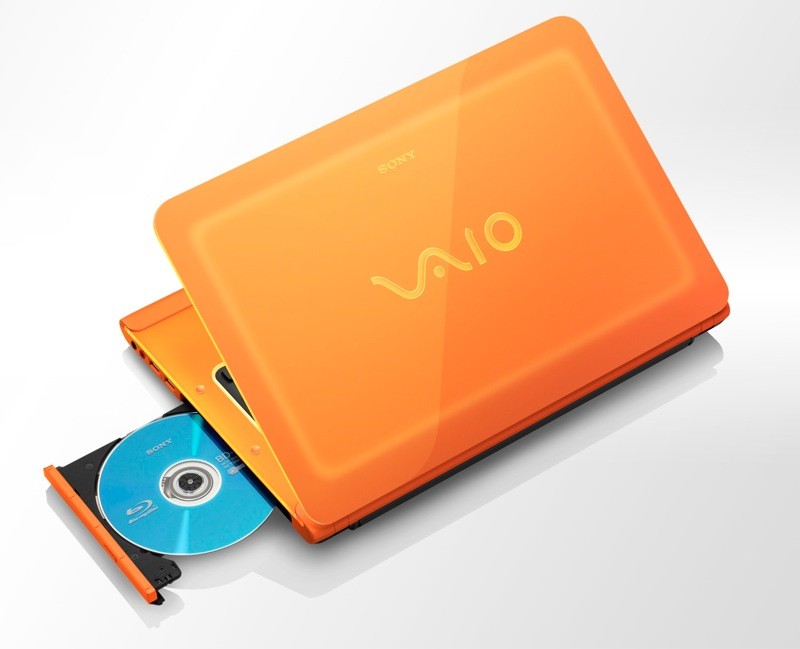
Sony VAIO CA and CB Gain Intel Sandy Bridge Core i5, Blu-ray

Starting on March 13th, you can pre-orde the new Sony VAIO CA and CB which first showed off their new radical designs and color at CES. Coming in with a neon green and orange, expect additional colors in the future though we don’t have a date on that yet. With a touchpad that “emits a beautiful glow”, Sony really wanted these units to stand out from other notebooks out there. The CA10 packs a 14-inch screen while the bigger brother CB10 comes in with a 15.5-inch. Both units will be available with the new Intel Sandy Bridge Core i5 processors, AMD Radeon HD 6630 graphics, and Blu-ray drives. Not bad for a series that starts at $880. For those who want a little more entertainment in their living rooms, select models will have the new Intel’s WiDi 2.0 chip, which enables you to stream 1080p video to your TV. If you have a PS3 or Bravia television, both laptops series will also come with Sony’s Remote Keyboard which allows you to use your VAIO as a navigation and input device. Hit the jump for an action packed press release, in plain ol boring black and white, though more neon colored laptops will be featured.

We Launch a Weekly Sony Podcast. Check Out Our Other Feeds as Well!


2010 was a year of tremendous growth for our site. Not only did we have a record year with our readership exploding, but we also had a record number of posts, totaling at 469. Still, a site like this would be nothing without our readers and I’m a firm believer of a two-way conversation. After all, this website is meant to be a community for Sony fans and 2010 gave you a number of ways to interact with us. Besides the comment section that follows every story, we also have a Facebook page and Twitter feed in order to interact with you guys and give you the latest news.

Sony creates Single Copper Cable for Cellphones, helps give them more flexibility

Many times when we see patents for a particular product or technology, it’s meant to be something that may or may not happen and can be years down the line. For Sony, this new design is right around the corner. Inside of most handsets, especially the flip and split screens, runs about 22 cables that connect power, control signals, audio, video and other functions of the phone. With this new single wire interface technology, Sony will be replacing all of them with a single cable that is capable of doing speeds of 940Mbps. This means that not only is Sony able to clear the clutter inside of the phone and give their engineers more space for other components or help reduce weight and size, but they will also give the design team a lot more freedom to create. Sony has stated that it plans to “swiftly” use this new creation.

[Via Sony]

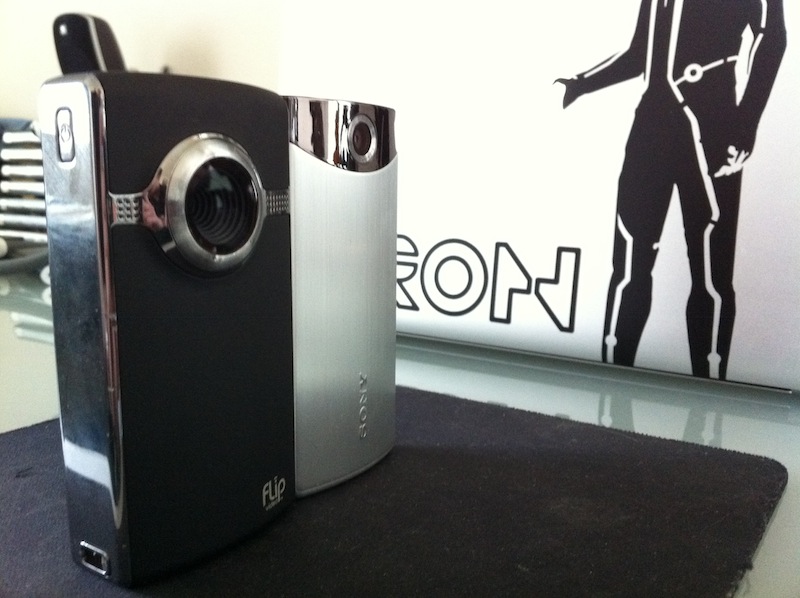
Sony Bloggie Touch (MHS-TS20) Review, and Bloggie Touch vs. Flip UltraHD (video)


Over the last several weeks, we’ve had the chance to test out the Sony Bloggie Touch. From our initial unboxing video to see what lay inside of this slick new packaging; to our Sony Bloggie Touch Mac OSX Software review and installation guide video. Everything we had seen from the hardware and software we liked, but anything by itself can shine. So we set out to find out, if the Bloggie Touch would shine, next to the popular Flip UltraHD.

Flip camera’s were really the first into the MP4 camera market and created a phenomenon. Being easy to use and easy on the wallet, these little guys were also known to grab some great footage. I know this because I’ve had one for over a year. The simplicity of this device has made creating videos and uploading them to sites like YouTube and Facebook a breeze. With a hot new market segment, Sony was quick to follow in with the original Bloggie, offering a dizzying array of functionality, specs, while being marred with poor video quality. Sony soon missed what made the Flip so popular, simplicity. Still, this did not detour the electronic giants, sending its engineers back into the lab with a simple motto, simplicity in the outside, state of the art in the inside.

The fact is, when a company like Apple makes a product, they pack cutting edge technology under the hood, but they do it ever so elegantly where anybody can pickup their device and use it. The end user doesn’t care and shouldn’t care about the level of technology under their product. Instead, they should be able to use the product with ease and while getting the best quality out available.

No PS4 in the Immediate Future


Many would agree that there isn’t a need for a PlayStation 4 yet. The PS3, year after year continues to expand on its offerings. The little console that started out with games and Blu-ray playback can now deliver a new and much improved PSN store, Netflix, Hulu and Vudu movies services. Sony also via software has added 3D gaming and 3D Blu-ray capability to every PS3 and has taken motion control gaming to the next level with the release of the PlayStation Move a little over 6 months ago. With Sony’s  Qriocity Music and Movie streaming service expanding to countries, and games continuing to improve upon their last year counterparts like Killzone 3, Uncharted 3 and LittleBigPlanet 2, there seems to be little getting in the way of the PS3 staying fresh, up to date and cutting edge, 5 years after its release.

Because of that, there seems to be little point for Sony to start working on the PS4. If work began on the machine now, we could see a 2013 or 2014 release date and I don’t think the consumer is ready for another machine yet and frankly with Sony focusing on the NGP, their Tablets and Sony Ericsson lineup, I think the company has enough going for them. Luckily, Sony seems to be on the same page.


Sony PS3 Firmware 3.56 Now Live, Qriocity Feature Now Available for United States


Sony has just released the PlayStation 3 Firmware 3.56, adding its Qriocity Music Unlimited cloud service to the PS3, as well as select Bravia and Blu-ray players. The PSP will soon gain this feature via a separate update. Those who turn on their PS3 will be greeted with a notification that will point them to their system update. The small update will only take a few minutes to complete, though once logged back into your PS3, you will note that the “Terms of Service/User Agreement And Private Policy” has been changed. In order to continue, you have to agree to the new set of terms, mostly like centered around Qriocity.

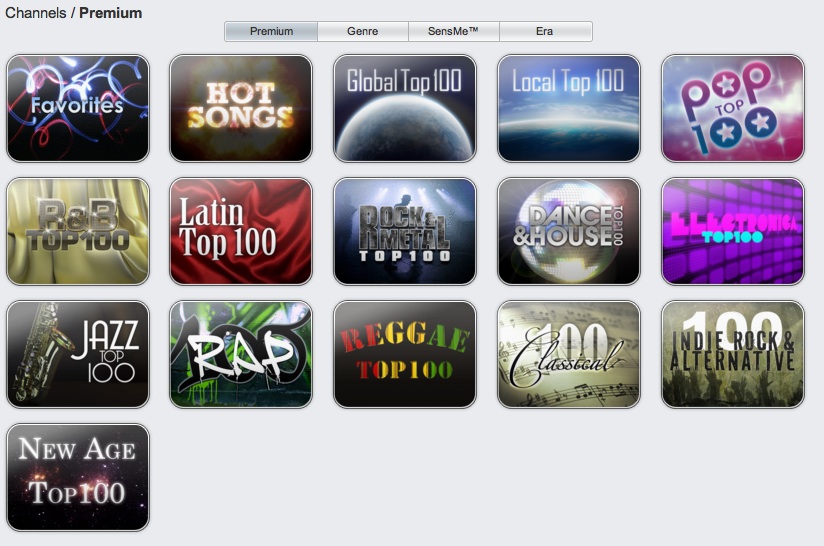
As we have reported in the past, Qriocity first went live in December in the UK and Ireland and soon expanded to other European countries in January. A month later and the service is now live for the United States, allowing users access to over 6 million songs. This cloud based music service allows users to stream unlimited music, with a Premium at $9.99 or Basic at $3.99. The premium service allows access to premium channels such as Hot Songs, Global 100, Local 100 and Pop 100 to name a few. Other premium features including the capability to search the entire Qriocity music data base, and music synchronization.

New PS3 Terms of Service

Music synchronization might be one of the killer features of this service. Once activated on your PC (yup, sorry Mac users), you can download a program that will scan your music library and sync it with your main account. Now, whenever you log into a Qriocity enabled device with your account, you will have access to all of your music. Sony is currently offering a free 30 day premium trial offer.

Qriocity Premium Channels

Current Qriocity enabled devices include your Web Browser (Mac or PC with FireFox and Safari support), PlayStation 3, 2011 Bravia TV’s, Blu-ray Players and the PSP soon. Sony is looking to bring this service to its up coming lineup of Android phones (Xperia Arc, Play, Neo, Pro) and plans to further expand the service to other Android phones and iOS devices.

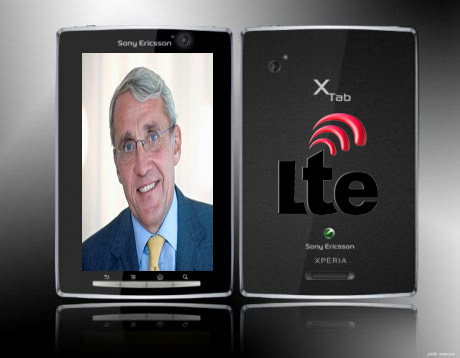
Sony Ericsson to Release LTE Device “Pretty Soon”, Could Be the Sony S1 Tablet?

Little is still known about the Sony’s Tablet ambitions outside of the few facts that we’ve reported. Still, it’s interesting to see Sony Ericsson CTO Jan Uddenfeldt talk about the future of the company and mention LTE devices and Tablets in the same conversation. As Uddenfeldt mentioned, Sony Ericsson is looking at bringing LTE devices to the market “pretty soon”, with a focus on the US market. The first of their goals was reached with the Android assault of phones, ranging from the Sony Ericsson Xperia Arc, Play, Neo and Pro that are set to be released in the US in the next few months. Secondly, Sony Ericsson wanted a partner in the US this time around and their partnership with Google helped them secure deals with Verizon who is getting the Xperia Play exclusive. This is actually quite a big step for Sony as prior to this, their phones would get released in the US with no carrier support. This meant that consumers who actually wanted their devices had to hunt down the few select locations that sold them. Once found, because of the lack of carrier support, the phones would be at full price, instead of the usual carrier subsidized price with a two year contract.

Now with multiple handsets on their way to the US market with carrier partners, Sony is discussing their LTE ambitions as well. With Sony already having TD-LTE prototypes in house, they expect to release LTE devices “pretty soon” though no exact time frame was given. However, what might be even a bigger news is the fact that Uddenfeldt mentioned a collaboration between between Sony and Android on future tablets. Could this mean that the Sony S1 tablet is actually a collaboration between Sony and Ericsson? If their new handsets are any indication, this would make perfect sense. Especially if you consider that tablets are designed around the idea of connectivity, outside of WiFi offering. With Sony Ericsson, Sony can offer 3G, 4G and LTE variations with carrier support to ensure their product has a healthy network connectivity behind it. Outside of that, not much more was given from the Sony Ericsson CTO.

[Via Fierce Wireless]

New NEX Out in April, the NEX-C3

We now have confirmation that Sony will be updating their NEX series in the near future, starting with the NEX-3 in April and finishing off with the NEX-5 a few months later. Currently, all we have is that the new NEX dubbed the NEX-C3 will be getting a new housing to match the current NEX-5 for improved grip and quality. The other upgrade that we know about is an imaging sensor improvement, offering the same sensor that is used in the current NEX-5 which allowed for better video quality. No words yet on what changes will be in order for the NEX-5 but I for one hope for a GPS chip. I seriously love geo tagging my photos and viewing them in iPhoto and only my Cybershot HX5 currently offers that. For those are fine with the current offerings of the NEX-3, Amazon seems to be doing some price drops to clear inventory for the up coming unit.

[Via SonyAlphaRumors]